
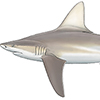
The most common large shark in Virginia waters — Chesapeake Bay is one of its most important nursery grounds. Can reach 3 feet (2.5 meters) and inhabit shallow and deep water.

Learn more about shark species that occur in Chesapeake Bay, off Virginia Beach, and in Virginia coastal waters.
All shark illustrations © Marc Dando
The most common large shark in Virginia waters — Chesapeake Bay is one of its most important nursery grounds. Can reach 3 feet (2.5 meters) and inhabit shallow and deep water.

Can grow to 18 feet (5.5 meters). Prey on other large marine animals and even garbage. Only occasionally visit Virginia waters, usually 10-20 miles offshore.

Most common shark encountered on VIMS surveys. Small sharks that grow up to only 3.6 feet (1.1 meters) and have elongated snout. Mostly mature males in Virginia waters.
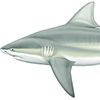
Stout bodies with blunt rounded snout. Prefer shallow water habitats and known to travel into rivers. Migrates into Virginia and further north seasonally.
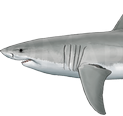
Relatively uncommon shark frequenting cold and warm temperate seas. Juveniles caught on VIMS surveys while larger individuals inhabit warmer ocean water.

Small sharks common in lower Chesapeake Bay and Virginia in the summer and fall. Lack a heavy spine seen on both dorsal fins of spiny dogfish, another local dogfish species.

Heavy fishing pressure on this species has reduced its numbers, rare in Virginia. Can be mistaken for sandbar or silky shark.

Can grow up to 9.8 feet (3.2 meters) and migrate seasonally as far north as Cape Cod in the Atlantic. Can be mistaken for spinner sharks.
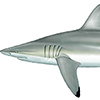
Known for vertical spinning leaps out of the water. Can grow to 9.8 feet (3 meters) and are highly migratory, moving in large schools inshore during the spring and summer.
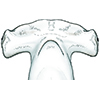
Arrive in Virginia coastal waters in June, and migrate south along the coast from August to October. Most common hammerhead locally. Can grow up to 14 feet (4.2 meters).

Less common than scalloped hammerheads in lower Chesapeake Bay and Virginia's coast, seen during the summer months. Their head is smooth and lacks a scalloped edge.

Smaller sharks that migrate north in the summer. Distinct dusky spot on tip of snout and yellow-green color. Catches have increased recently in VIMS surveys.
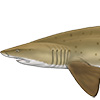
Large, slow-moving sharks commonly found inshore occupying bottom habitats in Virginia in the summer months. Unlike other sharks, have two equal-sized dorsal fins.
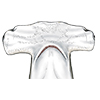
Is uncommon in the Southeast United States, but migrates north seasonally in summer.